Tyre Emergency While Driving

Tyre Problem While Driving?

Whether you've suffered a blowout, hit a pothole, or developed a dangerous puncture, here's what to do next — and once you're safe, we'll be with you in as little as 60 minutes to fit a replacement tyre.

Before Anything Else

Stay Safe First

This is the only part that matters right now. The tyre can wait a few minutes — getting yourself somewhere safe can't.

  1. Ease off, don't brake hardTake your foot off the accelerator and let the car slow naturally. Sudden braking on a failing tyre can make you lose control.
  2. Indicate and move leftSignal early and work your way to the hard shoulder, a lay-by, or the nearest safe spot — not the spot closest to where it happened.
  3. Hazards on, get out safelyPut your hazard lights on. If you're on a motorway hard shoulder, exit from the passenger side and stand behind the barrier.
  4. Then call usOnce you and anyone with you are somewhere safe, call us with your location. We'll talk you through what we need to know.
On a live carriageway with nowhere safe to stop? Call National Highways (999 in an emergency) before calling us. Your safety comes first — we'll still be here once you're somewhere we can reach you.

Once You're Safe

What Happened?

Different damage behaves differently. Recognising which one you're dealing with helps you understand what to do next, and what we'll need to bring.
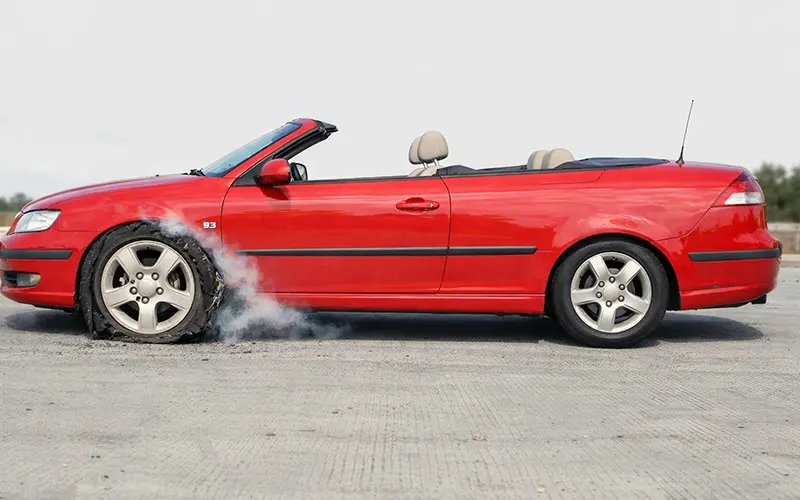
Shredded tyre after a blowout
Stop driving

Blowout

A loud bang followed by a sudden loss of control or pressure. Usually requires tyre replacement — the tyre itself is rarely salvageable after this.

Call Now
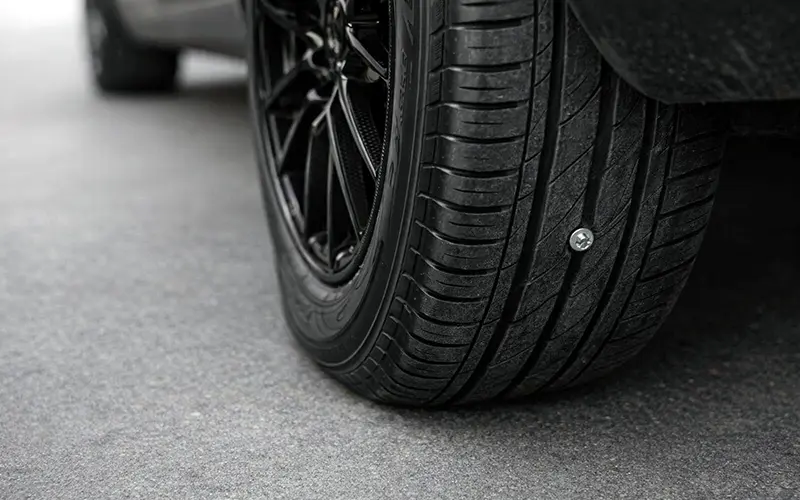
Nail embedded in a tyre tread
Get somewhere safe

Sudden Puncture

Pressure drops rapidly. The vehicle may still be controllable, but continuing to drive on it can destroy the tyre beyond repair.
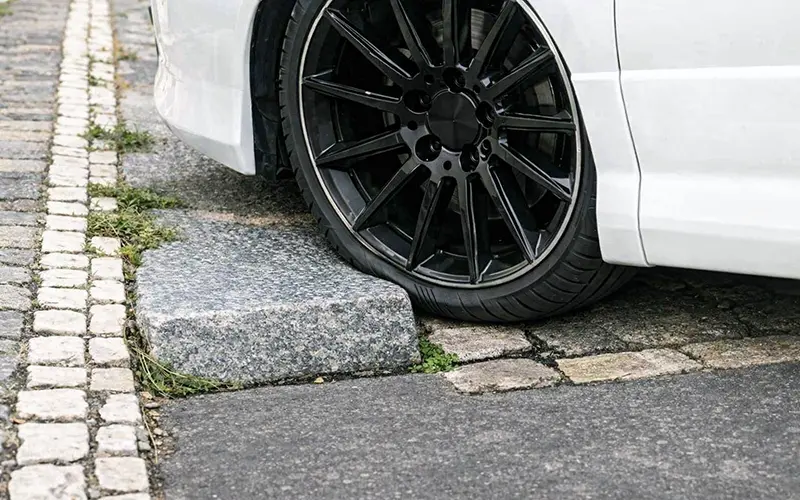
Split sidewall damage close-up
Stop driving

Sidewall Damage

Often caused by kerbing or a hard pothole strike. Once the sidewall has split, it usually can't be repaired safely — it needs replacing.
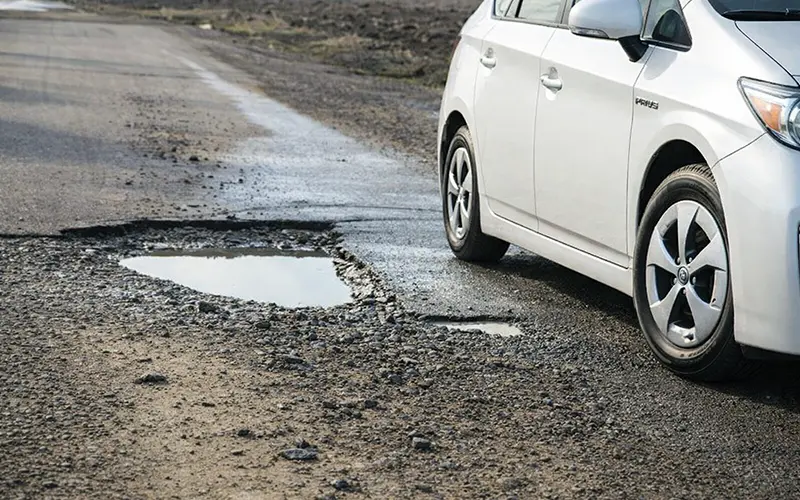
Wheel and tyre damage after a pothole strike
Worth checking

Pothole Damage

Sometimes the tyre survives, sometimes the sidewall splits, and sometimes the wheel itself is bent. Worth a check even if it still looks fine.

Call Now
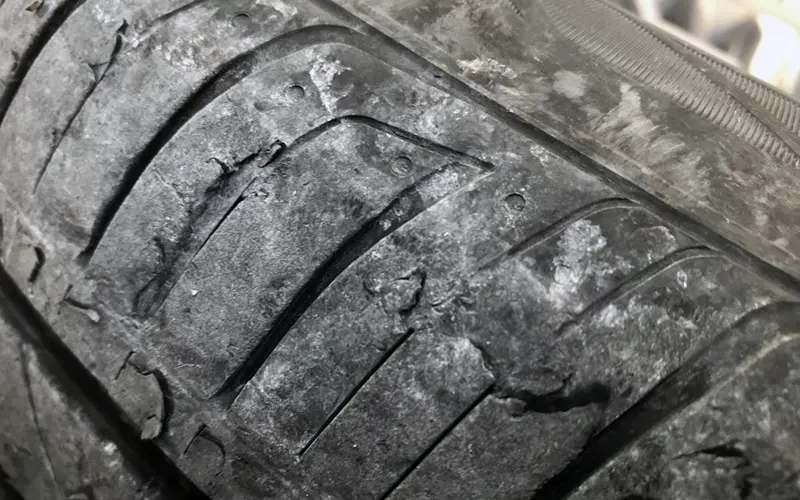
Tyre tread peeling away from the casing
Stop driving

Tyre Delamination

The tread separates from the tyre casing, sometimes in strips. This gets worse, not better, the longer you keep driving. Stop as soon as it's safe.
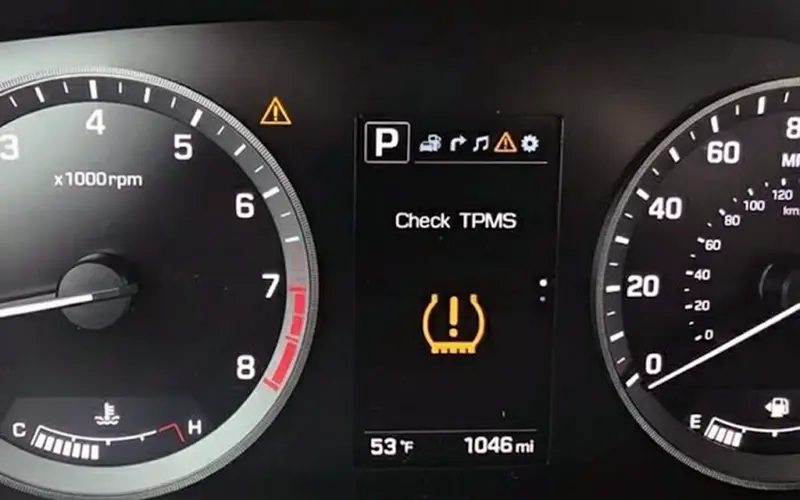
Dashboard TPMS tyre pressure warning light
Slow developing

TPMS Warning While Driving

The dashboard light may be the first sign of a slow puncture. Stopping early, before the tyre is fully flat, often prevents further damage.

Tell Us When You Call

Where Have You Managed To Stop?

Wherever you've ended up, it helps us to know — it changes how we plan the job, not whether we'll come.

Hard Shoulder

Good. Stay behind the barrier where there is one. Call us once you and anyone with you are clear of the carriageway.

Lay-by

Perfect. Lay-bys are one of the easiest places for us to attend safely — plenty of room to work.

Service Station

One of the easiest places for us to reach you. Park away from the pumps and let us know which one.

Country Road

No problem — we'll come to your location. A postcode or what3words pin helps us find you quickly.

Residential Street

We'll replace the tyre right there on your road, on your driveway, or outside your home.

Our Side Of It

Can We Help?

  • We aim to be with you in as little as 60 minutes — in an emergency, speed matters most.
  • We come to you, wherever you've managed to stop — hard shoulder, lay-by, driveway, or roadside.
  • We carry tools for locking wheel nuts, so a missing key doesn't hold things up.
  • We assess the wheel as well as the tyre, since pothole and kerb damage can affect both.
  • You don't need to arrange recovery to a garage — the garage comes to you instead.

Right Now

Call us once you're safe

Have your location, vehicle, and tyre size ready if you can. If you're not sure of the size, that's fine too — we can usually work it out from your reg.

Call 020 3978 0040

Worth Knowing

Why Tyres Suddenly Fail

Tyre failures rarely come from nowhere. Most have been building for weeks — they just become obvious all at once.

Underinflation builds heat

A tyre running low on pressure flexes more than it should with every rotation. That flex generates heat, and heat is what eventually causes the casing to fail — often as a blowout, often at speed.

Sidewalls don't self-heal

Tread can wear gradually, but a sidewall is either intact or it isn't. A kerb strike or pothole can damage the internal structure without leaving an obvious mark — and then fail later, with no warning.

Age matters more than tread depth

Rubber compounds harden over time even with plenty of tread left. A tyre well past five or six years old can fail unexpectedly, particularly if it sees a lot of motorway miles.

Slow punctures hide in plain sight

A nail or screw can seal itself enough to leak slowly rather than deflate immediately. Pressure drops over days, not seconds, until a TPMS light or a wallowing feel in the steering gives it away.

Potholes load the wheel, not just the tyre

A hard impact transfers force straight through the tyre into the wheel rim. The tyre can look fine while the rim is bent — which then causes uneven wear or a vibration days later.

Mismatched pressures wear tyres unevenly

A tyre running at the wrong pressure for too long wears unevenly across the tread. That uneven wear reduces the margin it has left before a puncture turns into a structural problem.

Questions Drivers Often Ask

Common Questions

Can I drive on a flat or badly damaged tyre to get somewhere safer?
A short distance at very low speed, to clear a genuinely dangerous spot like a blind bend or a live lane, is reasonable. Beyond that, driving on a flat or shredding tyre risks damaging the wheel itself, which turns a simple tyre replacement into a more expensive repair. If you're already somewhere reasonably safe, it's better to stop where you are and call us from there.
How long does mobile tyre fitting take once you arrive?
Once we're with you, fitting itself typically takes 30 to 60 minutes, depending on your vehicle and the job. The variable part is travel time to reach you, which depends on your location and how busy we are at that moment.
Do you carry tyres for my vehicle, or do you need to order one in?
We carry most premium and budget tyres on the van, including run-flats. Tell us your tyre size and vehicle when you call and we'll confirm straight away whether we have it with us or need to source it first.
What if my wheel nuts are locked and I can't find the key?
This happens more often than you'd think, especially with used or older cars. We carry locking wheel nut removal tools and can usually get the wheel off without the original key.
Can you attend a hard shoulder or live carriageway?
Our priority is your safety, not just the tyre. If you're on a hard shoulder, behind the barrier is far better than the verge. On a fast or live carriageway with no safe stopping point, please call National Highways or the police first, and only contact us once you've reached somewhere we can safely work.
Is mobile tyre fitting more expensive than a garage?
The tyre itself costs the same as it would at a garage. The difference is a call-out fee, which varies depending on the time of day and your location — you're paying for the convenience of us coming to you rather than arranging recovery to a garage yourself.
What payment methods do you accept?
We accept all major debit and credit cards, Apple Pay and Google Pay, as well as cash.
Tyre Emergency? Call 020 3978 0040