
Problems We Fix
Rounded locking wheel nuts
The unique pattern on top of the nut worn smooth, usually from a previous attempt with the wrong key.
Seized or corroded nuts
Rust and road grime can bind a locking nut to the wheel so tightly that the key alone won't shift it.
Lost or broken keys
No key, a snapped one, or a key that's been bent out of shape from repeated failed attempts — we can still get the wheel off.
Over-tightened nuts
Common after a service or tyre change where an air gun, rather than a torque wrench, was used to do the nuts up.
Stuck sockets
If a standard socket has been knocked over the nut and is now spinning freely on the collar, we can remove that too.
How We Remove a Locking Wheel Nut Without Damage
Specialist Master-Key Sets
Our first step on most jobs — a graded set of master keys matched to your locking nut's pattern, used the same way the original key would have worked.
Stud Extractor Tools
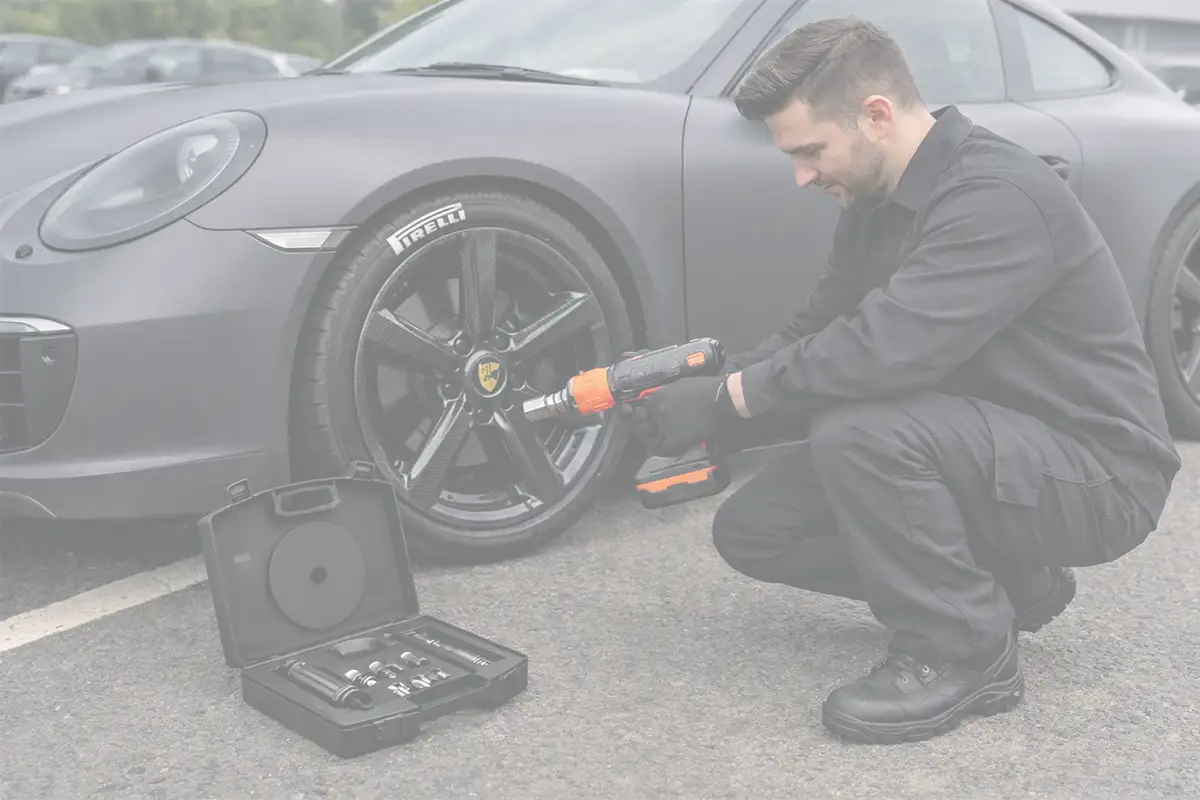
For nuts that are rounded or have a worn pattern, a stud extractor grips the outside of the nut to remove it without needing the original key at all.
Drilling — Last Resort Only
Used only when nothing else will shift the nut, and carried out carefully to avoid any damage to the wheel or stud underneath.
DIY methods like drilling, welding or chiselling at home are best avoided — without the right tools they're time-consuming and can easily damage the rim, the wheel stud, or the tyre itself. If you'd rather not risk it, we can normally have a technician with you the same day.
Locking Nuts We Regularly Remove
Some manufacturers use locking systems that are notoriously difficult to remove without the right tools.
Jaguar & Land Rover
Known for nuts that snap easily if forced — we carry tools designed specifically for these locking systems.
Citroën & Peugeot
French manufacturers often use locking wheel bolts rather than nuts, which need a different removal approach entirely.
McGard spinning-collar nuts
Designed to spin freely if attacked with the wrong tool — exactly why a specialist approach matters here.
All other makes & models
From everyday family cars to performance and prestige vehicles — if it has a locking wheel nut, we can remove it.
Why Locking Wheel Nuts Get Stuck
Most stuck locking nuts come down to one of a few common causes:
- Over-tightening with an air gun rather than a torque wrench, often during a previous service or tyre change
- Corrosion building up between the nut and the wheel over time
- The key's pattern wearing down after repeated attempts with a worn or incorrect key
- The original key being lost, broken, or simply never handed back after a previous repair
Keeping Your Key Safe
- Store it somewhere memorable — the glovebox or boot compartment works well
- Always ask for it back after a service, repair or tyre change
- Ask any garage to tighten by hand and torque to spec, not with an air gun
- A brightly coloured key wallet makes it harder to lose or overlook
What Is a Locking Wheel Nut?
A locking wheel nut is a security fastening fitted to a vehicle's wheels to deter alloy and tyre theft. Each wheel typically has one locking nut alongside the standard nuts, released only by a uniquely patterned key supplied with the set. Because that key is the only way to remove the nut, losing it — or having it become damaged through over-tightening — is what usually leads to needing a specialist removal.
Locking Wheel Nut Removal FAQs
Areas We Cover
Mobile locking wheel nut removal across London and the Home Counties.

Related Services
Emergency Flat Tyre Assistance
Tyre fitting wherever your vehicle is located, home, work or roadside.
Learn more about flat tyre assistanceTyre Emergency While Driving
Blowout, puncture or sidewall damage while driving? We'll come to you and fit a replacement.
Learn more about tyre emergencies while drivingFleet & Commercial Tyres
Emergency tyre services for vans, taxis, couriers and commercial fleets.
Learn more about fleet & commercial tyres